South Africa’s Codeine Addiction
Codeine is the most commonly used opioid in the world and is available over the counter (OTC) as an active ingredient in many pain and cough-relieving remedies. Several countries are reconsidering the OTC status of codeine due to concerns over the misuse, abuse and addiction to the medicine.
June sees Drug Awareness Week taking place from the 24th to the 30th and the Independent Community Pharmacy Association (ICPA) is urging South Africans to be aware of the dangers of codeine addiction.
Although statistics for South Africa are not readily available there is an estimated 600,000 South Africans addicted to this opiate.
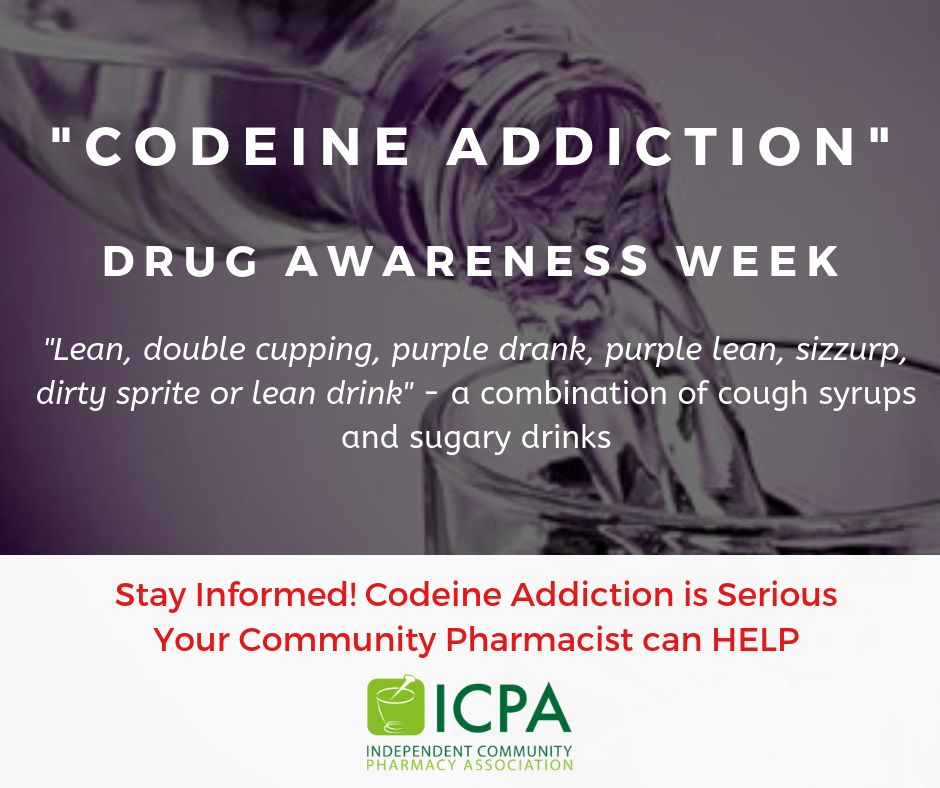
“Lean, double cupping, purple drank, purple lean, sizzurp, dirty sprite or lean drink” is the lingo used in South Africa and across the world, made popular by international rappers – “Purple drank” refers to a combination of cough syrups and sugary drinks.
According to Jackie Maimin, CEO of ICPA, codeine use often starts out innocently enough with a purchase of codeine-based cough syrup or pain reliever from a pharmacy for a particular ailment. “Though less potent, codeine provides effects similar to those of highly regulated and controlled opiates like morphine. As an opiate, regular codeine-use carries the risk of its users developing a tolerance to and eventually dependence on it. Users turn to the drug to cope with their emotional pain as well as the physical pain,” warns Maimin.
Despite the ease with which codeine can be obtained it is still a dangerous and potentially deadly drug that can cause lives to spiral out of control.
What is codeine?
Codeine is a centrally active, low-efficacy opioid or narcotic analgesic. It is derived from the opium poppy plant and is related to the drug heroin. Since codeine is a member of the opiate drug class, it has similar morphine-like effects on the body, giving users a sense of calm and well-being.
Codeine is contained in over the counter, schedule 2, medication and is typically found in common medicines used to treat the symptoms of colds and flu, suppress coughs and ease headaches and general pain.
How can you become addicted?
Regular or long-term use of codeine medication (several times a day for several weeks or more) can lead to addiction. It can take as little as two weeks for tolerance, and ultimately dependence, to start.
Maimin explains that people often find themselves increasingly using codeine based medication without making a conscious decision to do so. Regular use of codeine-containing pain-killers can also lead to rebound headaches – in other words, codeine actually starts to cause the headaches it is meant to be alleviating. “You may get frequent headaches that only seem to respond to the codeine-based pain-killers for example. So next time the headache strikes you grab the codeine and you may even start using it to prevent a headache. Over time you need more of it more frequently to get the same pain-relief and so the vicious cycle starts.”
Signs and Symptoms of codeine addiction
According to ICPA, if you are worried that you or someone you care about is suffering from an addiction to codeine, then check the level of dependency by answering the questions below:
- Have you tried to cut down or stop using medicines that contain codeine, but have been unsuccessful or found it very difficult?
- Have you continued to use codeine-containing medication even after the original symptoms disappeared?
- Can you get through a whole week without using your codeine-containing medication?
- Do you find yourself needing higher and/or more frequent doses of your codeine-containing medication to achieve the desired results?
- Have you experienced any withdrawal symptoms, such as sweating, anxiety, anger or irritability, between doses or when you try to stop taking your codeine-containing medication?
“If you have answered Yes to any of the questions above the ICPA recommends that you seek professional help – speak to your pharmacist, GP.”
“As a body which represents the interests of independent community pharmacies across South Africa, the ICPA feels that it is part of our responsibility to alert people to the prevalence and dangers of codeine addiction,” concludes Maimin.