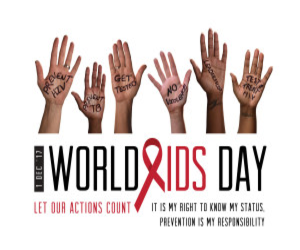
World AIDS Day is commemorated each year on the 1st of December and is an opportunity for every community to unite in the fight against HIV, show support for people living with HIV and remember those who have passed away. The 2017 theme is “It is my right to know my status. Prevention is my responsibility”.
This year independent community pharmacies across South Africa have come out in support of World Aids Day with an HIV/AIDS awareness programme that is encouraging everyone to find out their status by getting tested.
Jackie Maimin, CEO of the Independent Community Pharmacy Association (ICPA) explains that until recently, South African pharmacies were prohibited from selling HIV self-testing kits. “Following recommendations by the World Health Organisation (WHO), this ban has been lifted by the South African Pharmacy Council (SAPC) and HIV self-screening kits are now available for sale at pharmacies across South Africa.”
What is HIV self-screening testing?
HIV self-screening testing is a process in which a person collects their own specimen (biological fluid) and then performs a test using a supplied self-testing kit and interprets the result immediately, in the privacy of their own home. Tests using saliva and blood are available and are considered equally accurate.
More South Africans need to know their status
The WHO has reported that currently 40% of all people with HIV (over 14 million) remain unaware of their status. That means that millions of people infected with HIV are not getting the life-saving treatment they are entitled to. It also means that they could, unknowingly, be spreading HIV infection to others.
The United Nations has set targets to diagnose 90% of all people living with HIV by 2020. Countries are looking for ways to rapidly increase access to, and use of HIV testing services in order to achieve this ambitious target. According to studies undertaken by the WHO, self-testing has been shown to nearly double the frequency of HIV testing amongst certain population groups. HIV self-screening should open the door for many previously untested people to find out their HIV status and get access either to treatment or prevention services.
Using an HIV self-screening test kit
The ICPA advises consumers to ensure that the kit they purchase is one approved for sale in South Africa. These HIV self-screening test kits are easy to use, and give results within 15-20 minutes. The test kits approved for sale in South African pharmacies are considered to be 99% accurate. “However, remember that it takes between 6 to 12 weeks for the body’s immune system to create antibodies to the HIV virus. As an HIV self-screening test is looking for the antibodies – and not the actual virus – it is possible to get a “false” negative test result during this window period. For this reason, it’s important to test regularly if you are at high risk of contracting HIV, and if you suspect that you may have been exposed to the virus, to re-test after a minimum of 6 weeks to confirm a negative diagnosis.”
The purchase of an approved HIV screening test kit from a pharmacy comes with the reassurance that one is using a reliable kit and that there is professional counselling readily available to answer any questions, assist with the interpretation of results and help with referral to appropriate health facilities if necessary. There are currently over 1100 ICPA pharmacies with 3000 pharmacists and over 20 000 support personnel across South Africa available to assist people with any queries regarding HIV, HIV testing and access to care.
“It is very important to understand that an HIV screening test kit is for screening purposes only and that a diagnosis of HIV infection is only made after a second confirmatory test at an approved health facility.”
Counselling
“One of the original reasons for the prohibition on the sale of self-screening kits was the implications an HIV positive result could have on a person testing at home with no support or counselling. Twenty years ago, a diagnosis of HIV infection was the equivalent of a death sentence and the negative stigma around HIV infection reinforced social inequalities based on gender, race, ethnicity, class, sexuality and culture. Thankfully the advent of effective treatment with new anti-retroviral treatment(ART) regimens has dramatically improved patient outcomes and today, a well-managed HIV positive person can expect to lead a relatively normal life,” explains Maimin.
“ICPA hopes that the availability of these self-screening kits will boost the numbers of people testing for HIV and therefore the number of people who know their status. Knowing one’s status is empowering, it allows an individual to make health-related decisions around early treatment if positive, or to actively engage in safer practices to stay HIV-negative.”